
Soda Dungeon 2
Armor Games Studios IncAdventure
4.62.03K Reviews
- Version
- 1.2.21
- Installs
- 1.00M
- Age Rating
- Teen
Screenshots
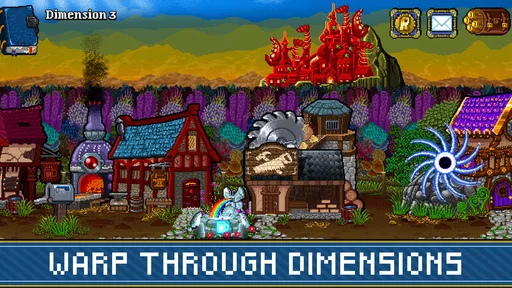
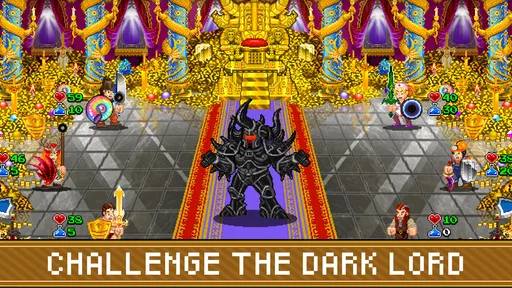
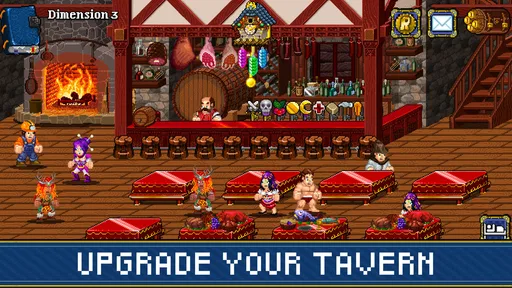
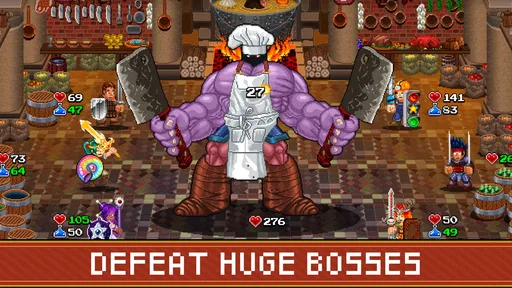
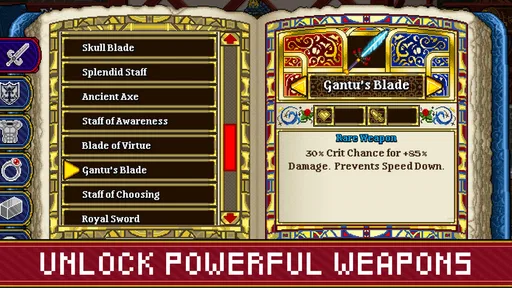
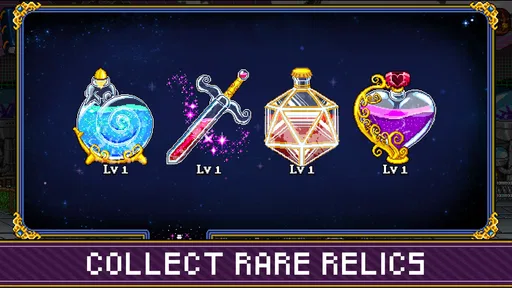
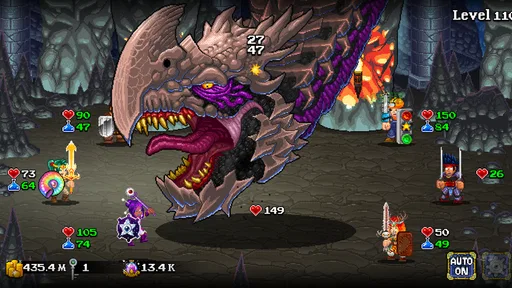
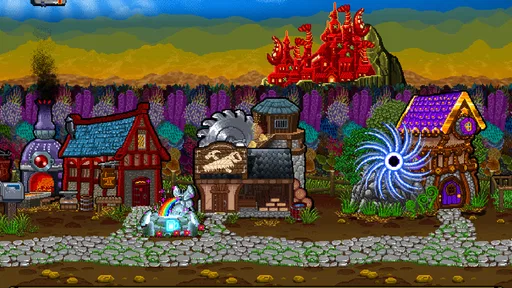
Our Review of Soda Dungeon 2
 Analysis by Appyee
I first approached Soda Dungeon 2 expecting a light adventure game that would be easy to pick up and put down. That impression is accurate, but it undersells what makes it work. This is a free Android adventure game from Armor Games Studios Inc that turns dungeon runs into a relaxed routine: prepare a team, send it into danger, collect what comes back, improve your setup, and try again. The loop is simple enough for a quick break, yet layered enough to keep me thinking about better decisions after I close the game.
It is also a particularly interesting choice for a shared household device. The game does not demand constant attention, so someone can play while waiting for dinner, during a commute, or between other tasks. At the same time, its progress and decisions feel personal. On a tablet or phone used by several people, I would treat it as an individual game rather than something everyone should casually alter. That distinction matters more here than it might in a purely competitive title.
How the dungeon loop feels in everyday use
The most appealing part of the game is its rhythm. I can make a few choices, watch a run develop, and return later without needing a long uninterrupted session. That makes it a comfortable alternative to adventure games built around real-time reactions, complicated controls, or a large open world that expects me to remember exactly where I was. The presentation is deliberately relaxed, and the humor helps keep failure from feeling too punishing.
In a realistic everyday scenario, I might open it while waiting for an appointment. I can use that short window to review my party, adjust equipment, and begin a run. If I have more time later, I can examine the results and decide whether to invest in stronger preparation or change the way I approach the next dungeon. This makes it more flexible than a game that only feels satisfying after a long play session.
That convenience does not mean the game is mindless. The useful decisions are often made before the action begins. Choosing how to spend resources, which upgrades deserve attention, and when to take a risk can matter more than simply tapping through the next encounter. I found that the game rewards a patient player who notices patterns instead of treating every run as an isolated attempt.
One practical tip is to avoid spending everything immediately after a successful expedition. Keeping a reserve gives me room to respond when a promising upgrade or a difficult stretch changes my priorities. The temptation to improve whatever is available right away is strong, but a little restraint makes later planning less frustrating. This is one of the less obvious strengths of the design: the relaxed tone hides a modest resource-management game underneath.
Why its automation changes the way I play
The game’s appeal is closely tied to its hands-off feel. I am not constantly controlling every movement, so my attention shifts toward preparation and long-term improvement. That is a good fit for people who enjoy the structure of a dungeon crawler but do not want every moment to demand fast reflexes. It also means that the satisfaction comes from seeing a plan work, not from mastering a difficult control scheme.
There is a trade-off. Players who want direct control, dramatic timing, or highly expressive combat may find the experience too passive. I sometimes wanted a more active role when a run became unpredictable. The game is better understood as a planning-focused adventure with dungeon-crawling flavor than as a traditional action RPG. Knowing that before downloading it will prevent a lot of disappointment.
A second useful habit is to treat failed runs as information rather than wasted time. When a team falls short, I look at what the attempt revealed: whether the group lacked durability, whether the equipment was too uneven, or whether I pushed forward before the overall setup was ready. That mindset makes the repetition feel purposeful. If I simply repeat the same arrangement without learning from it, the loop can become mechanical very quickly.
Shared devices need clear boundaries
For a household with one phone or tablet, I would establish a simple rule before anyone starts: one person manages the active save and major spending decisions. This is not because the game is unsuitable for sharing, but because incremental upgrades and dungeon progress can be easy to disrupt accidentally. A younger player may tap through a choice quickly, while another family member may prefer to optimize every resource. Those are different play styles, and mixing them without agreement can create unnecessary arguments.
The cleanest arrangement is to decide whether the device belongs to one player or whether the household is taking turns with a shared run. If it is a shared run, I would agree on who handles purchases, who chooses the next challenge, and whether everyone gets a chance to suggest changes before a run begins. These are household habits rather than built-in controls, but they make a noticeable difference when several people use the same screen.
I would also avoid treating the game as a communal activity that must happen continuously. Its slower structure works well for coordination, but it does not require everyone to be present at the same moment. One person can prepare a run, another can review the outcome later, and the household can discuss what to try next. That makes it more practical than games whose enjoyment depends on a full group being online together.
There is an important boundary around purchases. The game is free to download and includes optional in-app purchases ranging from $0.99 to $49.99 per item. On a shared device, I would make sure everyone understands that free access does not automatically mean every tap is consequence-free. I would keep spending decisions with the device owner and explain that progress should not be accelerated casually just because an offer appears during play.
Age context and trust at home
The listed content rating is Teen, so I would not hand it to a young child without first looking at how they respond to dungeon combat, fantasy danger, and in-app purchase prompts. The game’s laid-back style makes it feel approachable, but a friendly presentation does not change the age guidance. For teenagers, it can be a reasonable independent game, especially when they enjoy planning and repetition more than competitive pressure.
For younger players, the bigger household issue may be judgment rather than difficulty. A child who understands that upgrades use real money and who can follow a family spending rule may handle it well. A child who taps quickly or becomes frustrated by repeated attempts may need an adult nearby. I would frame the game as a planning exercise, not as a reward system that should always be made faster with purchases.
Trust also affects how much supervision makes sense. I would not assume that every teenager needs constant monitoring, nor would I ignore the age label simply because the game looks cheerful. A short conversation about spending, shared progress, and respectful use of the device is more useful than hovering over every dungeon run. The best household arrangement gives the player room to make choices while keeping financial decisions clear.
Another point worth considering is attention. Because the game is easy to revisit, it can quietly become a default activity whenever there is a spare minute. I find that manageable when I choose a stopping point before starting a run. In a family setting, agreeing that the device remains available for calls, schoolwork, or other users is sensible. The game’s convenience is a strength, but convenience can also make it easy to overuse.
Progression, experimentation, and practical strategy
My favorite strategic detail is that the game encourages experimentation without requiring a perfect build from the beginning. I can test a different combination, observe where it struggles, and refine the plan. That makes it friendlier than games where an early mistake permanently ruins a character. Still, experimentation has a cost in time and resources, so I prefer changing one major part of a setup at a time. That way, I can tell what actually improved the result.
I also recommend separating short-term and long-term goals. A short-term goal might be surviving the next difficult stretch, while a long-term goal could be building a more reliable team or improving the overall economy of a run. If I focus only on immediate rewards, I may overlook upgrades that make future attempts smoother. If I focus only on distant progress, the current session can feel slow. Alternating between the two keeps the loop more satisfying.
This is where the game compares well with many familiar mobile adventure alternatives. It asks less of my reflexes than an action-heavy dungeon game and less of my schedule than a large story-driven RPG. Compared with a purely idle title, however, it gives me more meaningful preparation choices. I am not just watching numbers rise; I am deciding how to make the next expedition more dependable.
The comparison also exposes its limits. A conventional action adventure is a better choice if I want exploration to feel physical and immediate. A competitive multiplayer game is better if the main attraction is testing skill against other people. A heavily narrative RPG may offer stronger character drama and a more directed story. Soda Dungeon 2 sits between those options: it is a low-pressure, systems-focused adventure for players who enjoy gradual improvement.
What the current Android package means for a household
The game was released on June 25, 2020, and the current version is 1.2.21. It supports Android 6.0 and later, which makes it accessible on a broad range of devices that are still in use. That helps if a family has an older spare phone or tablet available, although the actual comfort of play will still depend on the condition and screen size of that device.
Its audience is already substantial: the game has passed one million installs, with an average rating of 4.6 from around thirty-four thousand ratings and about two thousand written reviews. I see those figures as a useful sign that the basic loop has connected with a wide audience, but they should not replace personal expectations. A popular relaxed dungeon game can still be the wrong fit for someone who needs direct combat or dislikes repetition.
I would also keep the free price in perspective. Being free makes it easy to try without committing money upfront, but the optional purchase range means a shared household should still have a clear policy. If nobody wants any spending, the owner should communicate that before the first session. If purchases are acceptable, setting a limit outside the game is safer than making decisions impulsively during a run.
Armor Games Studios Inc has positioned the game as an approachable adventure rather than an intimidating strategy project, and I think that description matches the experience better than calling it a simple time-killer. It has enough structure to reward attention, but it does not require every member of a household to understand complex systems before enjoying a first session. The learning curve is manageable when players accept that progress comes through repeated preparation.
Who should play it, and who should skip it
I would recommend it to someone who likes incremental progression, light humor, dungeon themes, and games that can be checked in short sessions. It is especially suitable for a player who enjoys asking, “What should I change before the next attempt?” rather than, “How do I execute this move perfectly?” It can also work well for a teenager or adult sharing a device, provided the household agrees on progress and spending boundaries.
I would skip it if the main reason for downloading is to find an action game with constant control. I would also hesitate to recommend it to someone who loses patience with repeated runs, gradual upgrades, or outcomes that depend heavily on preparation. The relaxed pace is central to its identity, not a temporary phase before the game becomes a faster adventure.
For families, I would be more cautious when several people want separate progress on the same device. A shared run can be enjoyable if everyone treats it as a joint project, but it is a poor arrangement when each player expects private ownership of every decision. In that situation, separate devices or a different game designed around clear multiplayer participation would be more comfortable.
My household verdict
After spending time with it, I see Soda Dungeon 2 as a thoughtful choice for relaxed adventure rather than a substitute for a hands-on dungeon crawler. Its best quality is the balance between low effort and real planning: I can play casually, yet my decisions still shape whether the next run feels smooth or disappointing. That balance gives it more staying power than its simple presentation initially suggests.
For a shared household device, I would approve it with three conditions: agree who owns the save, keep purchases under adult control, and respect the Teen rating. With those boundaries in place, it can become an easy game to coordinate around without requiring everyone to play at the same time. One person can prepare, another can offer advice, and the group can decide together whether to take a safer route or try something more ambitious.
My final recommendation is positive, but specific. Choose it if you want a free adventure game built around preparation, repetition, and gradual improvement, especially when short sessions matter. Look elsewhere if you need active combat, rich cinematic storytelling, or a clearly separate profile for every household player. For the right audience, the smartest way to enjoy this game is to treat each dungeon run as a small experiment, not merely another tap-through task.
Verdict
Strengths of Soda Dungeon 2
- Deep crafting and upgrade systems reward long-term play.
- Offline progression lets teams keep working while you are away.
- Frequent random events make repeated dungeon runs less predictable.
- Multiple heroes allow flexible party setups for different challenges.
- Generous free-to-play structure avoids making purchases essential.
Limitations of Soda Dungeon 2
- Dungeon runs can become repetitive during extended grinding sessions.
- Later upgrades require substantial time or resource farming.
- Combat offers limited direct control once a battle begins.
- The large number of systems may feel overwhelming to new players.
- Some progression features are locked behind considerable waiting times.
Similar Picks in This Category
View All
Roblox
Roblox Corporation4.2

Pokémon GO
Niantic, Inc.3.5

Ninja warrior: legend of adven
TOH Games4.6

Ninja Arashi
Black Panther4.6

Eyes - The Horror Game
Fearless Games sp. j.4.5

Critical Action:Gun Strike Ops
FPS Shooter & Action Game4.3
Frequently Asked Questions
What is Soda Dungeon 2, and how does the gameplay work?
Soda Dungeon 2 is a role-playing adventure game built around recruiting soda-drinking heroes, exploring dangerous dungeons, collecting loot, and upgrading your town. Combat is turn-based, so you can choose actions manually or rely on automation for repeated battles. The game combines dungeon crawling, character progression, crafting, and incremental mechanics, making it suitable for both active play sessions and more relaxed, hands-off progress.
Is Soda Dungeon 2 free to download and play?
Yes, Soda Dungeon 2 can be downloaded and played for free, although it includes optional in-app purchases. You can progress through the main content without paying, but some purchases may help you obtain resources, convenience features, or cosmetic and progression-related bonuses more quickly. The game is designed around repeated runs and gradual improvement, so patience is often enough if you prefer not to spend money.
Does Soda Dungeon 2 require an internet connection?
Many parts of Soda Dungeon 2 can be enjoyed offline, which is convenient when traveling or playing without reliable mobile data. However, certain features may require an internet connection, including advertisements, cloud-related services, updates, or purchase verification. Offline progress and available functionality can also vary depending on your device and game version, so it is worth opening the game online occasionally to synchronize data.
Is Soda Dungeon 2 suitable for beginners who have not played the first game?
Yes, newcomers can start with Soda Dungeon 2 without playing the original Soda Dungeon. The game introduces its main systems gradually, including recruiting party members, equipping heroes, upgrading facilities, and managing resources. Some mechanics become increasingly complex later, but the early progression is accessible. Players familiar with the first game may recognize the basic concept while still finding new systems and expanded content.
What are the main advantages and disadvantages of Soda Dungeon 2?
The biggest strengths of Soda Dungeon 2 are its humorous presentation, simple turn-based combat, large amount of progression, automated dungeon runs, and satisfying upgrade loop. It works well for short sessions or longer grinding periods. On the other hand, repeated battles can feel repetitive, especially when relying heavily on automation, and progress may become slower in later stages. Optional purchases and advertisements may also affect the experience for some players.
Play our best games!


